Massive Channel Array Radar Mandatory for the Future of Automotive Safety
Massive Channel Array Radar Mandatory for the Future of Automotive Safety
During his presentation at the Tech.Ad conference on March 11, 2024, Dr. Jürgen Dickmann, Head of Radar and Radar-Perception at Mercedes-Benz Group, delved into the future requirements of automotive radar technology. He emphasized that the performance demands for ADAS radars necessitate an array of no fewer than 32×32 channels, and that the antenna must be dense to avoid inherent spatial ambiguity within the radar data. Dr. Dickmann’s statement was a bold one, an industry leader of his stature publicly recognized the indispensability of a high-channel-count radar.
Car manufacturers across the industry are actively pursuing solutions to enhance the reliability of advanced driver assistance systems (ADAS) and automated driving (AD), launching hands-off driving features and aspiring to eyes-off features (L3). Unfortunately, the results so far should be cause for concern. A recent release of Partial Driving Automation Safeguard Ratings by the Insurance Institute for Highway Safety (IIHS) evaluated the safety performance of partial driving automation systems in vehicles. Out of the first 14 systems tested, only one earned an “acceptable” rating. Two were rated “marginal,” and 11 were rated “poor.” As stated by IIHS – “These results are worrying, considering how quickly vehicles with these partial automation systems are hitting our roadways.”
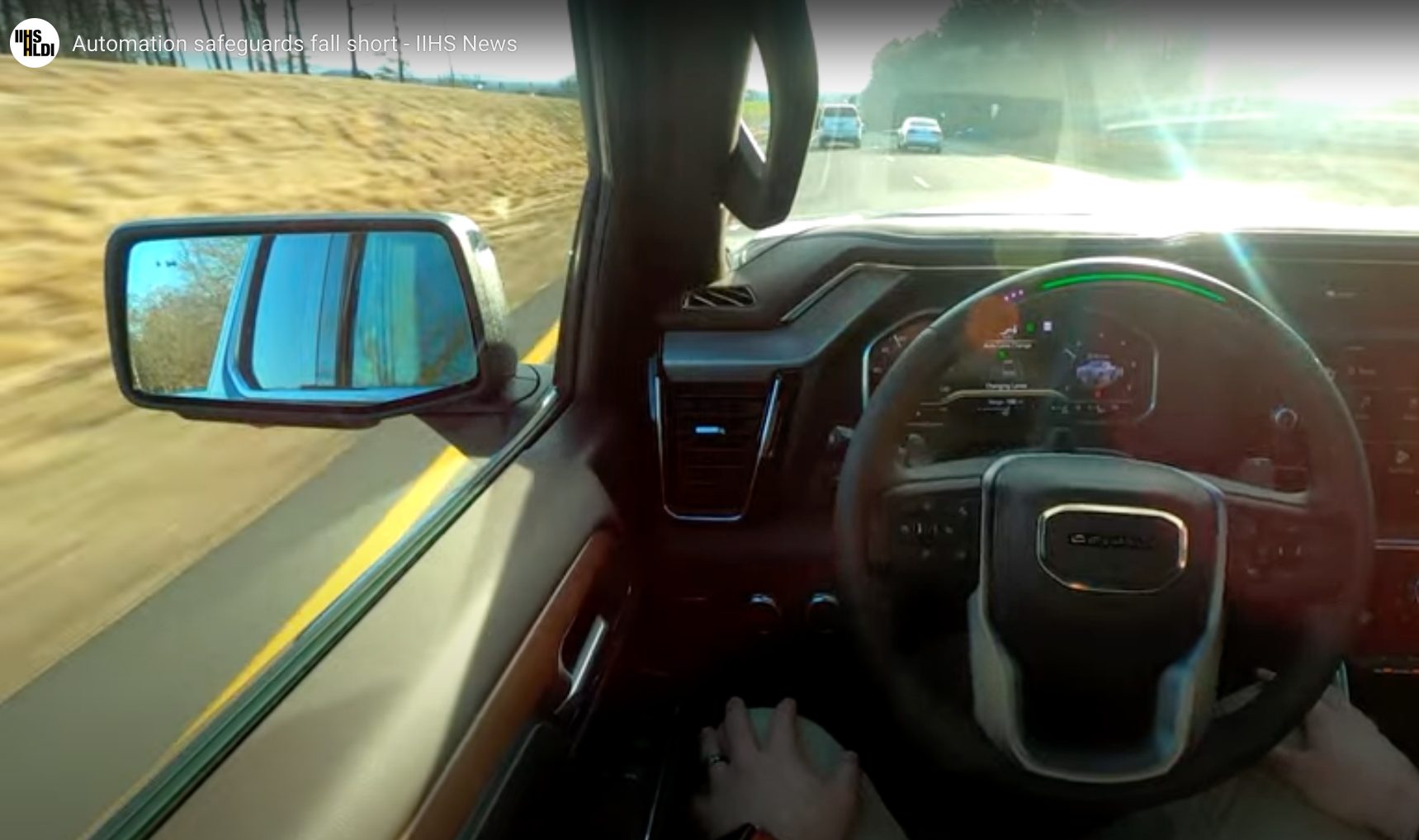
Source: IIHS Partial Automation Safeguard Ratings March 12, 2024
The automotive industry needs reliable sensing technology to improve safety outcomes for hands-off and eyes-off features. A massive channel array radar is that technology. It provides not only the standard radar benefits of extending detection range beyond cameras and lidar while also improving detection capabilities in adverse weather and lighting conditions, but also provides superior data redundancy and diversity and support sensor fusion. In fact, additional automakers have already added a minimum number of channels to their next generation radar RFQs, demonstrating that they will not rely on Lidar to solve the safety problem.
Legacy – or “traditional” – radars do extend detection range and improve detection capabilities in all environmental conditions, but they face significant performance issues. These include low azimuth resolution, limited range, absence of elevation dimension, and a high rate of false alarms. To address these limitations, some vendors are adopting radar solutions with a higher number of RF channels, typically ranging from 12×16 or 16×16. These solutions are sometimes referred as “Imaging Radar” as they provide better resolution and elevation capabilities (although still limited) compared to legacy radars, enhancing performance for basic ADAS features like automatic emergency braking (AEB) and automatic cruise control (ACC).
However, we believe the use of 16×12 radar systems for this purpose has demonstrated reliability gaps and necessitated the imposition of speed limitations. This is because hands-free (and, eventually, eyes-off) features demand even more advanced performance in terms of resolution and sidelobe reduction. Detecting small objects in challenging environments presents radar detection challenges, including dynamic range issues, the separation of multiple targets, considerations of elevation, and more. Further, achieving enhancement in advanced driving solutions necessitates sensor fusion. Sensor fusion demands a robust point cloud, which cannot be achieved without employing a wide channel array and a powerful radar processor.

Virtual Channels are λ/2 Apart
In comparison, we believe the benefits of a significantly higher number of channels are game-changing.
When paired with cameras in the sensor suite, a massive channel array radar ensures superior data redundancy and diversity, becoming indispensable to sensor fusion to achieve a safety level of AD and AV features, meeting the IIHS Partial Driving Automation Safeguard Ratings.
To date, very few wide array solutions have been announced, and Arbe offers the largest array to fit the 32*32 minimum requirement.
Arbe’s radar technology, designed to offer an optimal radar solution for L2+ and up to L5, is based on its proprietary chipset. The chipset includes a high port density RF chip with 24 channels Tx chip and a 12-channel Rx chip. Together, they create a channel array of 2,304 channels — the largest channel array in the industry. This is paired with a dedicated radar processor, designed with capability to process over the data generated, equivalent to 3Tb/s.
By harnessing cutting-edge radar technology and meticulously engineering a next-generation radar chipset to meet the rigorous demands of AD and AV performance, Arbe offers an optimal solution to traditional design obstacles. This breakthrough technology represents the innovation clearly required in the automotive market.
The future of ADAS and AV hinges on high-channel count radars. Arbe’s 2,304 Massive MIMO (48*48) Radar stands out for offering a hundred times the density, while maintaining competitive cost, size, and power. The choice is clear. By integrating high-channel-count radar systems now, automakers can position themselves at the forefront of autonomous driving technology.
————————————
This blog contains “forward-looking statements” within the meaning of the Securities Act of 1933 and the Securities Exchange Act of 1934, both as amended by the Private Securities Litigation Reform Act of 1995. The words “expect,” “believe,” “estimate,” “intend,” “plan,” “anticipate,” “may,” “should,” “strategy,” “future,” “will,” “project,” “potential” and similar expressions indicate forward-looking statements. Forward-looking statements are predictions, projections and other statements about future events that are based on current expectations and assumptions and, as a result, are subject to risks and uncertainties, including the risk and uncertainties resulting from the October 7th attack upon Israel, conflicts and potential conflicts involving Israel and the effect of the reaction to the war against Hamas on Israeli companies, particularly high tech companies as well as market acceptance of Arbe’s radar processor and Arbe’s radar processor performing in the manner which Arbe anticipates, and the risk and uncertainties described in “Cautionary Note Regarding Forward-Looking Statements,” “Item 5. Operating and Financial Review and Prospects” and Item 3. Key Information – Risk Factors” Arbe’s Annual Report on Form 20-F/A for the year ended December 31, 2022, which was filed with the Securities and Exchange Commission on May 16, 2023 as well as other documents filed by Arbe with the SEC. Accordingly, you are cautioned not to place undue reliance on these forward-looking statements. Forward-looking statements relate only to the date they were made, and Arbe does not undertake any obligation to update forward-looking statements to reflect events or circumstances after the date they were made except as required by law or applicable regulation. Information contained on, or that can be accessed through, Arbe’s website or any other website or social media is expressly not incorporated by reference into and is not a part of this blog.
Connect to learn more