Mastering 20 FPS Performance
– The automotive industry has identified 20 frames per second as a fundamental requirement for autonomous driving, providing environmental updates every 50 milliseconds to reduce perception gaps and enable higher confidence in object detection across highway and urban scenarios
– At 130 km/h, vehicles travel 36 meters per second; traditional radar at 10-12 FPS creates dangerous blind spots where critical changes occur between scans, while 20 FPS provides the rapid updates needed to detect lane changes, appearing obstacles, and urban hazards like cyclists or opening doors
– The primary technical challenge is processing enormous data volumes at high speed while managing increased power consumption and heat generation, requiring advanced processor architecture and thermal management solutions that legacy systems designed for basic driver assistance functions cannot provide
– Arbe’s proprietary processor architecture handles 30 gigabytes of raw RF data per second, compressing it into a 1-gigabyte point cloud output with innovative heat dissipation and power-efficient processing that enables sustained 20 FPS operation without excessive cooling requirements
– High frame rate radar aligns temporally with cameras and other sensors, reducing perception latency and improving real-time tracking; traditional lower-frame-rate radar creates timing mismatches, while 20 FPS provides detailed motion cues that improve fused sensor stack reliability in complex driving environments
– Arbe delivers 20 FPS with 10x richer imaging than basic 12×16 imaging radar operating at 16 FPS, while legacy radar systems lack the computational capacity to handle autonomous driving complexity despite technically reaching 20 FPS for simpler driver assistance tasks
Mastering 20 FPS Performance
– The automotive industry has identified 20 frames per second as a fundamental requirement for autonomous driving, providing environmental updates every 50 milliseconds to reduce perception gaps and enable higher confidence in object detection across highway and urban scenarios
– At 130 km/h, vehicles travel 36 meters per second; traditional radar at 10-12 FPS creates dangerous blind spots where critical changes occur between scans, while 20 FPS provides the rapid updates needed to detect lane changes, appearing obstacles, and urban hazards like cyclists or opening doors
– The primary technical challenge is processing enormous data volumes at high speed while managing increased power consumption and heat generation, requiring advanced processor architecture and thermal management solutions that legacy systems designed for basic driver assistance functions cannot provide
– Arbe’s proprietary processor architecture handles 30 gigabytes of raw RF data per second, compressing it into a 1-gigabyte point cloud output with innovative heat dissipation and power-efficient processing that enables sustained 20 FPS operation without excessive cooling requirements
– High frame rate radar aligns temporally with cameras and other sensors, reducing perception latency and improving real-time tracking; traditional lower-frame-rate radar creates timing mismatches, while 20 FPS provides detailed motion cues that improve fused sensor stack reliability in complex driving environments
– Arbe delivers 20 FPS with 10x richer imaging than basic 12×16 imaging radar operating at 16 FPS, while legacy radar systems lack the computational capacity to handle autonomous driving complexity despite technically reaching 20 FPS for simpler driver assistance tasks
The autonomous driving industry has reached consensus: high frame rate operation is not a luxury feature but a fundamental requirement. Car makers across the global automotive industry have identified 20 frames per second (FPS) as a “must-have” capability for any radar system intended for hands free and autonomous driving applications. This market demand reflects the industry’s understanding that autonomous driving safety cannot be compromised by sensor limitations. When human lives depend on split-second decisions, every millisecond of latency reduction matters.
Arbe achieves the desired 20 FPS, delivering a complete environmental scan every 50 milliseconds to reduce gaps in perception. Just as crucially, though, Arbe also solves the dual challenges that come with high frame rate: data processing bottlenecks and thermal management. In doing so, we have created a radar system that meets and exceeds the demands of autonomous driving.
Frame rate in radar systems represents the number of times the radar transmits, receives and processes the RF signals within a single second. The relationship between frame rate and safety is direct. Each additional frame per second reduces the time between environmental updates, enabling faster detection of changes and quicker responses to emerging threats. This temporal resolution (think of it as “update frequency”) becomes critical when objects can appear, disappear, or change trajectory within fractions of a second.
The 20 FPS advantage extends beyond simply having more data points. Each individual frame contributes value related to performance, data quality, and latency reduction. Across multiple frames, the ADAS / AD system builds increasing confidence levels for perception – whether detecting moving objects or calculating detection probability. Having 20 frames within a single second enriches perception and dramatically increases confidence in environmental understanding compared to systems operating at lower frame rates.
High-Speed Driving
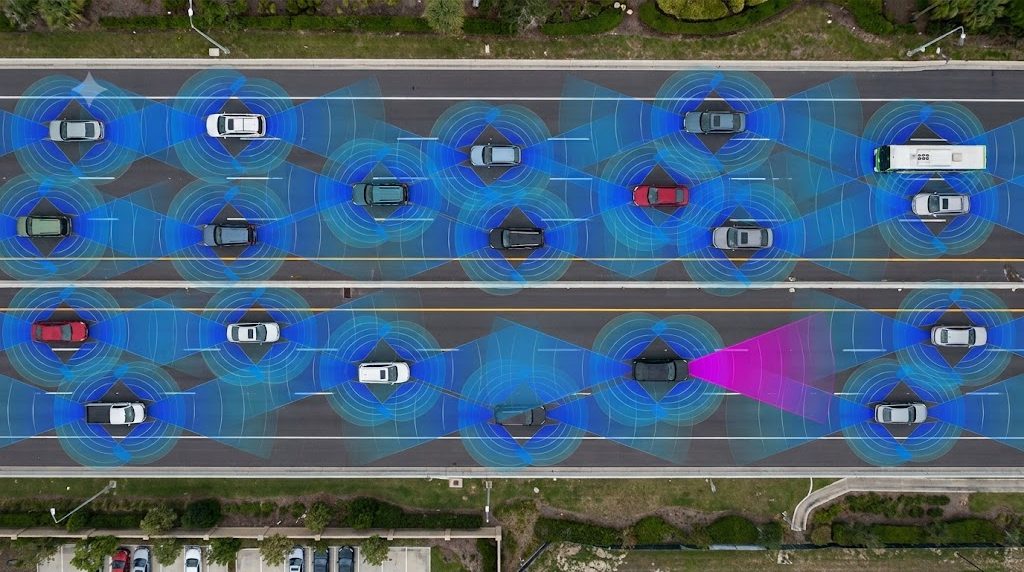
An autonomous vehicle traveling at highway speeds covers substantial distances between radar updates. At 130km/h, a vehicle travels approximately 36 meters per second. With traditional radar systems operating at 10-12 frames per second, critical changes in the environment—such as vehicles changing lanes or obstacles appearing—might occur between radar scans, creating dangerous blind spots in perception.
Urban Complexity
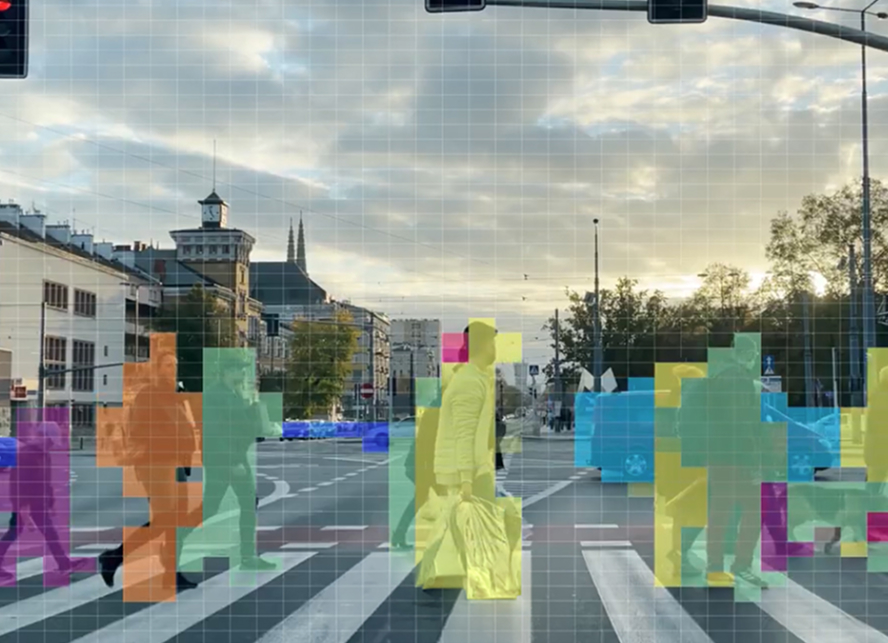
Likewise, urban environments present scenarios where objects can appear and disappear within milliseconds. A child stepping into a crosswalk, a cyclist emerging from behind a parked car, or a vehicle door opening unexpectedly all require immediate detection and response.
In both of these situations, the more frequently the radar system updates its environmental model, the higher the confidence level in object detection and tracking. While systems operating below 20 FPS can still enable functions like lane changes, they do so with reduced efficiency and increased challenges. In high-speed scenarios like autobahn driving or complex urban environments, these efficiency compromises can mean the difference between safe operation and dangerous gaps in perception.
Higher frame rates provide more frequent environmental updates, which radar achieves through both transmission,reception, and processing of signals. The most significant challenge, however, is the added processing power required, which creates significant technical hurdles. Arbe addresses the architectural challenges of processing a 20 FPS frame rate by innovating at the hardware level.
Data Volume
The primary obstacle to achieving high frame rates lies not in transmitting radar signals faster, but in processing the enormous data volumes generated. Each radar frame can generate gigabytes of raw data that must be processed, filtered, and converted into actionable information within milliseconds.
While legacy radar systems can technically reach 20 frames per second, they are designed to target much more basic functionality like automatic cruise control and automatic emergency braking. As a result, they often lack the computational capacity to handle the volumes and complexity required for hands free and full autonomous operation. Without adequate processing power, faster transmission speeds become meaningless for complex autonomous driving tasks.
Arbe’s breakthrough lies in our proprietary processor architecture. Our custom-designed chipset, built from the ground up as our own intellectual property, delivers the processing power needed to handle the equivalent of 30 gigabytes of raw RF data per second, efficiently compressing this into a 1-gigabyte point cloud output.
Thermal and Power Constraints
Operating at high frame rates inevitably increases power consumption and heat generation. More frequent RF transmissions require more electrical power, while intensive real-time processing generates additional heat. Both the sensor and the vehicle’s central processing unit must cope with these increased demands without compromising reliability.
The Arbe engineering team has addressed the thermal and power challenges through innovative heat dissipation solutions and power-efficient processing architectures. The result is a radar system capable of sustained 20 FPS operation without requiring excessive cooling infrastructure or compromising vehicle integration.
Operating the Arbe radar at 20 FPS makes it much better for combining data with other sensors through sensor fusion. Traditional radar systems usually run at lower frame rates, which means the data doesn’t line up well in time with high frame rate sensors like cameras. By contrast, combining radar and camera information with similar frame rates reduces perception latency and improves real-time object tracking and classification. Plus, the faster frame rate gives the radar more detailed motion cues and dynamic scene understanding. All of this improves the reliability of the fused sensor stack, especially in complex driving environments.
To further understand Arbe’s 20 FPS advantage, it’s essential to examine how our solution compares to existing radar systems and complementary sensor technologies across frame rates, applications, and capabilities.
| System/Solution | FPS | Application/Purpose | Comparison to Arbe |
| Legacy Radar (ACC/AEB) | Variable, up to 20 FPS | Basic driver assistance functions with limited object complexity | Solves simpler problems; lacks processing power for full autonomous driving requirements |
| Basic Imaging Radar (12*16) | Around 16 FPS | L2+ driving applications | Arbe provides an image that is 10 times richer and 25% higher frame rate with superior processing capability |
| LIDAR Systems | Typically 10 FPS | High-resolution 3D mapping | Arbe delivers better range and better weather performance at lower cost |
| Camera Systems | Up to 30 FPS | Visual perception and object recognition | Insufficient as only sensor for autonomous driving; Arbe provides weather-independent data for sensor fusion |
| Arbe HD Radar for Perception | 20 FPS (50ms) | Full autonomous driving with environmental understanding | Industry-leading combination of speed, processing power, and environmental resilience |
By solving the complex engineering challenges of high-speed data processing and thermal management, Arbe has delivered the essential frame rate performance for ADAS / AD.
The impact extends beyond technical specifications. Whether navigating high-speed highways or complex urban environments, Arbe provides the rapid environmental updates necessary to detect and respond to threats within the narrow time windows that autonomous driving demands.
As the industry moves toward higher levels of autonomy, Arbe’s high frame rate capability exemplifies the advanced performance that will make truly safe autonomous driving possible.
Connect to learn more