Evaluating LiDAR and Perception Radar for Real-World Autonomy
– LiDAR generates detailed 3D maps with high spatial resolution ideal for urban environments, but performance degrades dramatically in rain, fog, snow, and dust, range is limited to 150-250 meters, it lacks Doppler speed measurement capability, and high production costs limit mass-market adoption
– All-weather autonomous driving requires sensors that maintain reliable perception in adverse conditions, where LiDAR and cameras are compromised precisely when safety-critical advance warning is most needed, making weather-immune sensing technology essential for L2+ through full autonomy
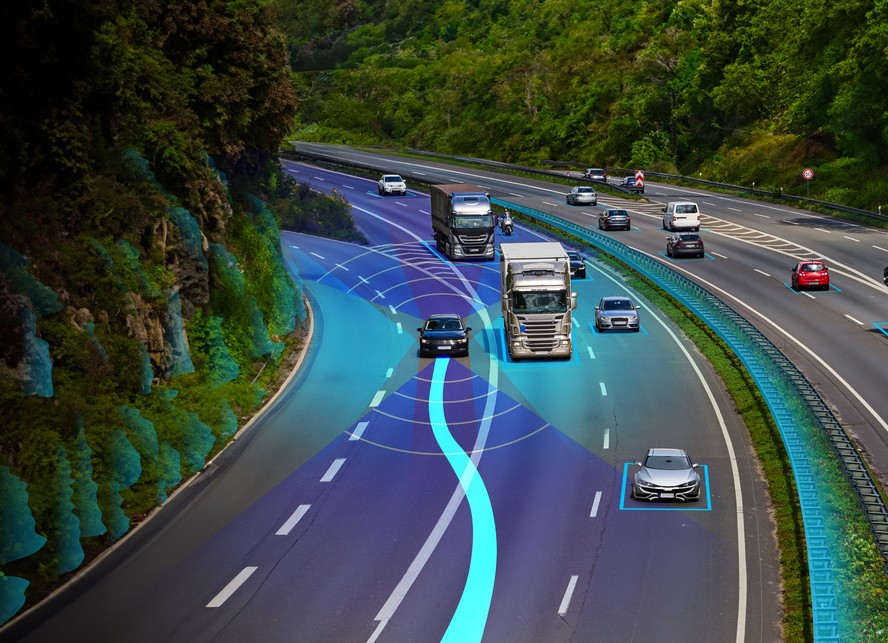
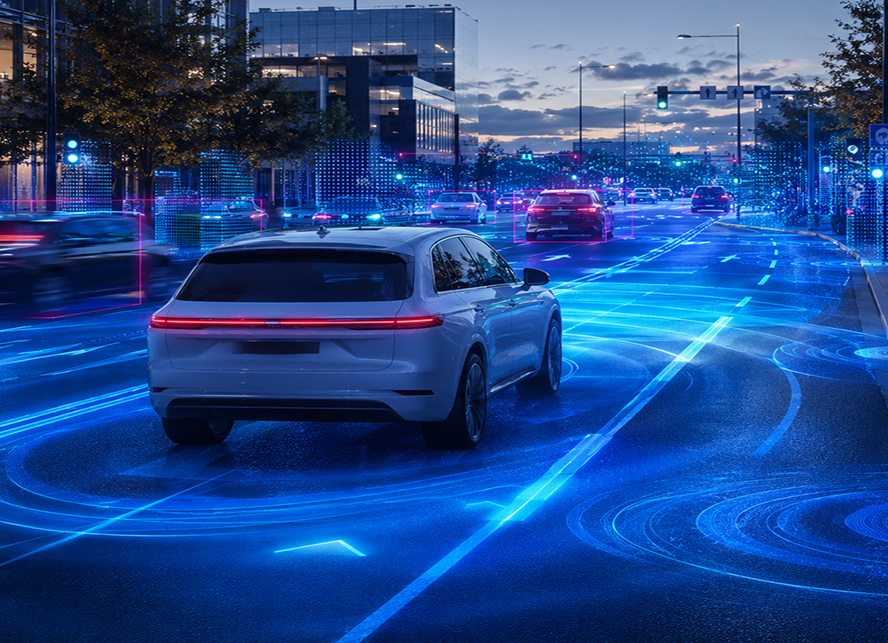
– Arbe’s 4D perception radar uses millimeter-wave signals unaffected by weather, providing detection from short range to over 300 meters with direct Doppler speed measurement, real-time free-space mapping, and reliable detection of low-reflectivity objects like pedestrians at night or road debris
– Perception radar integrates discreetly behind the vehicle bumper without structural modifications, is significantly more cost-effective and scalable than LiDAR, and functions as an independent data source that strengthens sensor fusion frameworks when paired with cameras and LiDAR
– Arbe’s 4D radar transcends traditional radar limitations with ultra-high resolution for precise object classification in dense urban traffic, inclement weather, and poor lighting, providing the all-weather perception backbone that makes comprehensive autonomous driving systems dependable in every scenario
Evaluating LiDAR and Perception Radar for Real-World Autonomy
– LiDAR generates detailed 3D maps with high spatial resolution ideal for urban environments, but performance degrades dramatically in rain, fog, snow, and dust, range is limited to 150-250 meters, it lacks Doppler speed measurement capability, and high production costs limit mass-market adoption
– All-weather autonomous driving requires sensors that maintain reliable perception in adverse conditions, where LiDAR and cameras are compromised precisely when safety-critical advance warning is most needed, making weather-immune sensing technology essential for L2+ through full autonomy
– Arbe’s 4D perception radar uses millimeter-wave signals unaffected by weather, providing detection from short range to over 300 meters with direct Doppler speed measurement, real-time free-space mapping, and reliable detection of low-reflectivity objects like pedestrians at night or road debris
– Perception radar integrates discreetly behind the vehicle bumper without structural modifications, is significantly more cost-effective and scalable than LiDAR, and functions as an independent data source that strengthens sensor fusion frameworks when paired with cameras and LiDAR
– Arbe’s 4D radar transcends traditional radar limitations with ultra-high resolution for precise object classification in dense urban traffic, inclement weather, and poor lighting, providing the all-weather perception backbone that makes comprehensive autonomous driving systems dependable in every scenario
Picture yourself driving on a winter evening. It’s dark and snowing heavily, severely limiting visibility. Your vehicle’s optical sensors, including cameras and LiDAR, face the same challenge. If a vehicle suddenly brakes ahead or a pedestrian crosses the road, reduced sensor performance can limit the advance warning needed to respond safely.
The radar vs lidar comparison becomes especially important when autonomous systems move beyond ideal driving conditions. LiDAR offers high spatial resolution and detailed 3D mapping, but its performance can be affected by adverse weather, while its range, lack of direct Doppler speed measurement, and cost present additional considerations. Perception radar brings a different set of strengths, including long-range detection, direct velocity measurement, and reliable operation across weather and lighting conditions.
Arbe’s Perception Radar is designed to address the shortcomings of both traditional radar and LiDAR while providing a crucial complementary sensing modality that works when other advanced systems cannot.
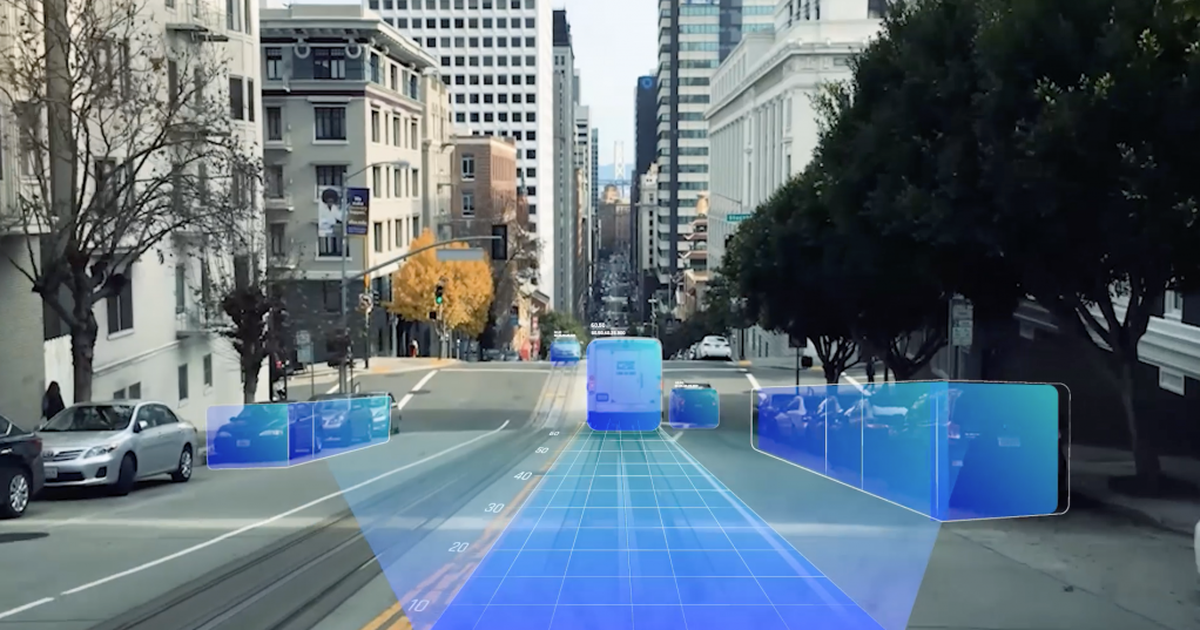
LiDAR emerged as a pivotal sensor technology in vehicle perception, stemming from Google’s L4 autonomous driving advancements. Its unique capabilities have attracted considerable attention in the automotive industry. By harnessing light waves, LiDAR generates exceptionally detailed 3D maps of the vehicle’s surroundings, showcasing remarkable proficiency across diverse application scenarios.
LiDAR’s outstanding spatial resolution enables precise object classification, which is crucial in complex environments. In urban autonomous driving settings, it excels at differentiating between pedestrians, bicycles, and other vehicles with remarkable accuracy. The sensor can detect even extremely minute obstacles, presenting intricate details that support navigation in controlled environments, such as precisely mapped areas or test sites.
The technology’s expansive field of view is immensely valuable in scenarios requiring comprehensive environmental awareness. For example, for autonomous taxis navigating urban landscapes, a wide field of view facilitates optimal route planning, enables effective collision avoidance, and enhances interaction with surrounding traffic and infrastructure.
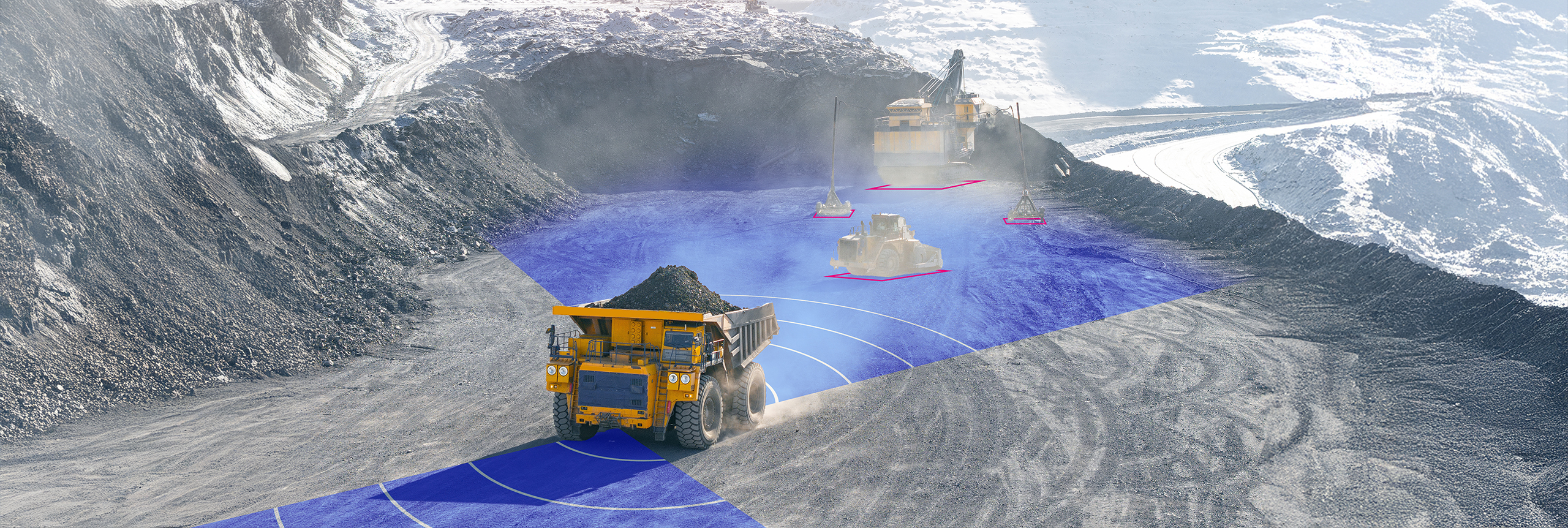
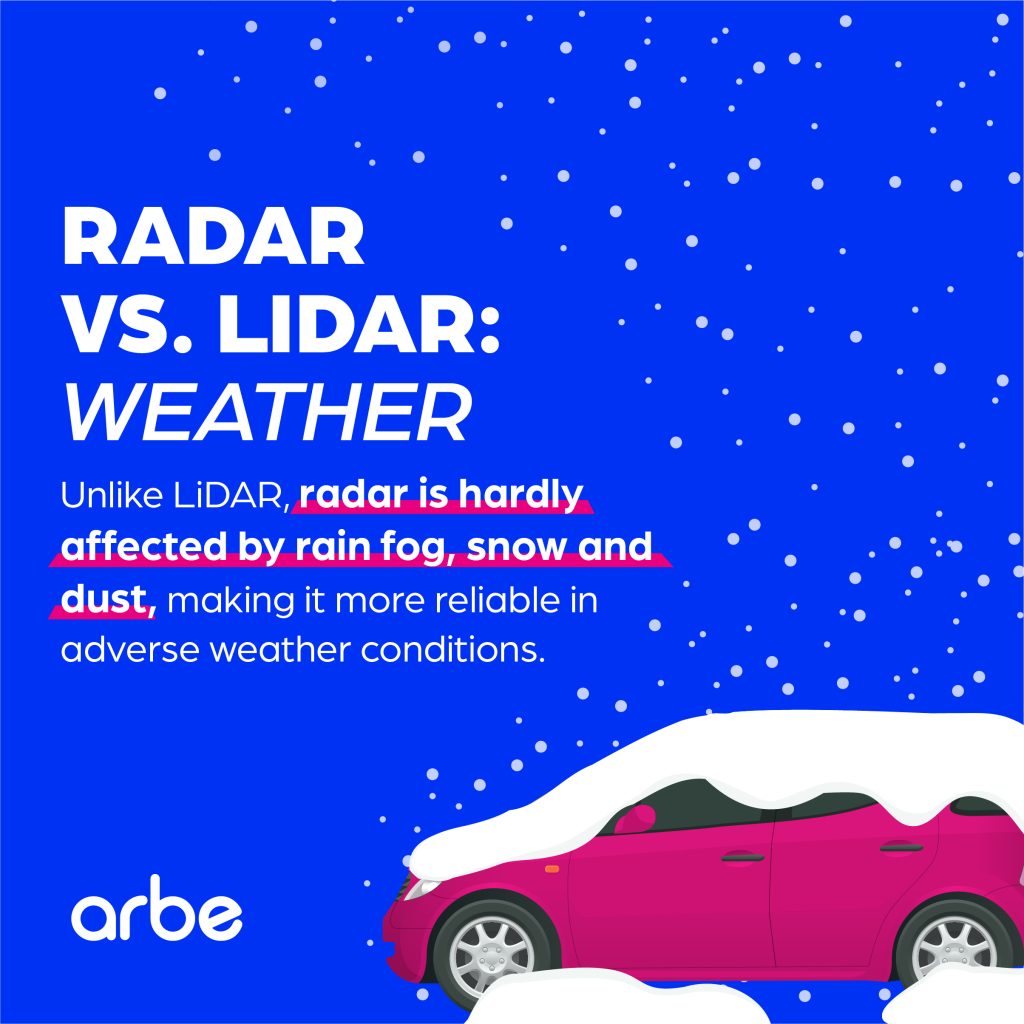
However, LiDAR is not without significant challenges. Its performance suffers dramatically in harsh weather conditions like rain, fog, snow, smoke and dust. Light waves become scattered and absorbed by water droplets or snowflakes, greatly impairing LiDAR’s ability to map the surrounding environment accurately. This weather sensitivity compromises its reliability in regions with unpredictable or extreme seasonal conditions.
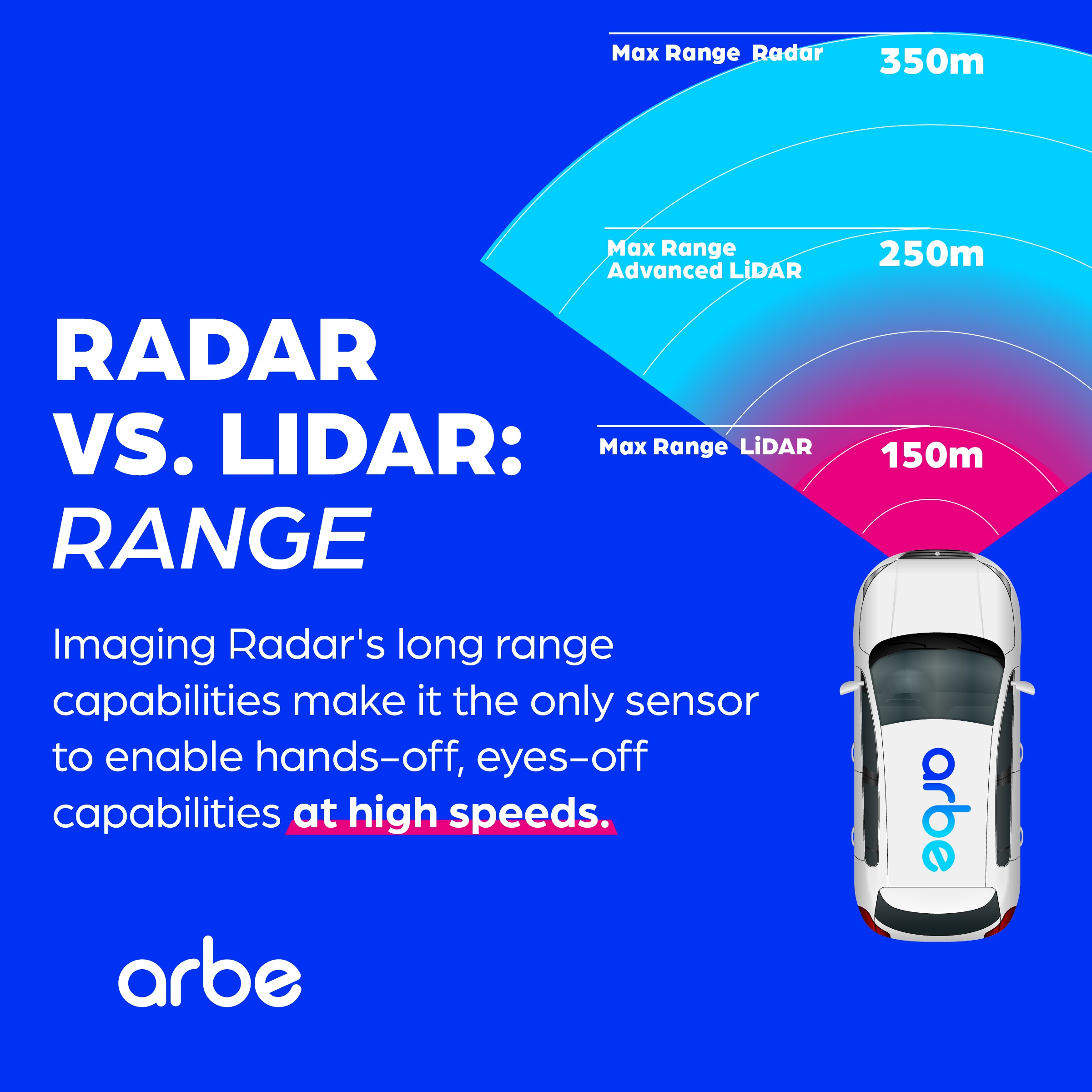
The long-term durability and stability of LiDAR’s performance merit further investigation. When subjected to challenging driving conditions – such as poor road surfaces or extreme temperatures – the reliability of LiDAR systems can become unpredictable. It is also limited to mid-range distances, which restricts its effectiveness in high-speed situations and long-distance hazard detection – a significant drawback. Plus, unlike radar, LiDAR lacks Doppler capability, making it less proficient at determining the speed of approaching objects – a critical limitation in situations where rapid speed assessment is essential for safe driving.
While Chinese LiDAR companies have progressively overcome manufacturing and large-scale production challenges, the technology still faces several constraints. These include:
| Feature / Metric | Arbe 4D Perception Radar | Standard Automotive LiDAR |
|---|---|---|
| Detection Range | Long-range coverage exceeding 300 meters, enabling high-speed hazard detection and advance warning required for highway operation. | Restricted to mid-range distances, limited to 150 meters and in some cases 250 meters; insufficient for highway scenarios. |
| Weather & Environmental Sensitivity | 100% Weather-Immune: Maintains reliable detection and tracking in heavy rain, fog, snow, smoke, dust, and darkness where optical sensors are compromised. | Performance diminishes dramatically; light waves scatter and absorb in rain, fog, snow, smoke, and dust, impairing mapping accuracy. |
| Speed Measurement (Doppler) | Direct Doppler capability: Directly gauges object speeds and tracks instantaneous velocity in real time for safe high-speed maneuvers. | Lacks Doppler capability; cannot directly measure object speeds, complicating its use in high-speed situations. |
| Cost & Market Scalability | Significantly more cost-effective and scalable, supporting broad adoption across mass-market automotive applications. | Intricate manufacturing processes and elevated production costs hinder widespread adoption in the mass market. |
| Durability & Integration | Long operational lifetime with solid-state reliability. Discretely integrates behind the vehicle’s bumper without structural alterations or aesthetic compromise. | Features delicate moving parts, resulting in shorter operational lifetimes and increased maintenance requirements. |
| Energy Consumption | Low power consumption, running efficiently without presenting cooling challenges. | Higher energy consumption, creating a notable impact on electric vehicle range and making it more challenging to cool. |
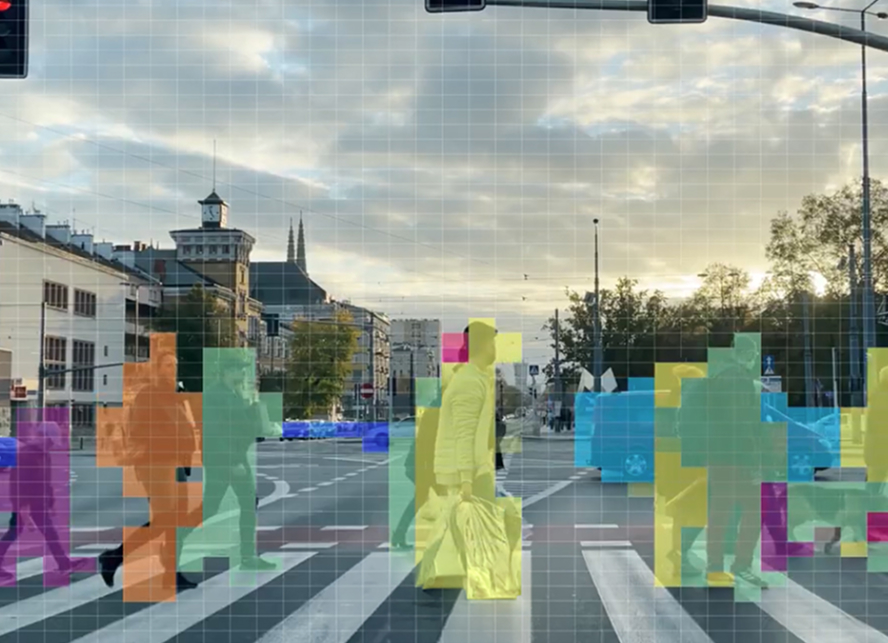
In recent years, 4D millimeter-wave radar has emerged as a formidable alternative to LiDAR, with Arbe’s technology leading the way. Arbe’s cutting-edge Perception Radar breaks traditional radar limitations, offering ultra-high resolution that enables precise target differentiation. Even in dense urban traffic, inclement weather, or poor lighting conditions, the radar can seamlessly classify and identify pedestrians, vehicles, and other objects, consistently delivering reliable detection and tracking capabilities.
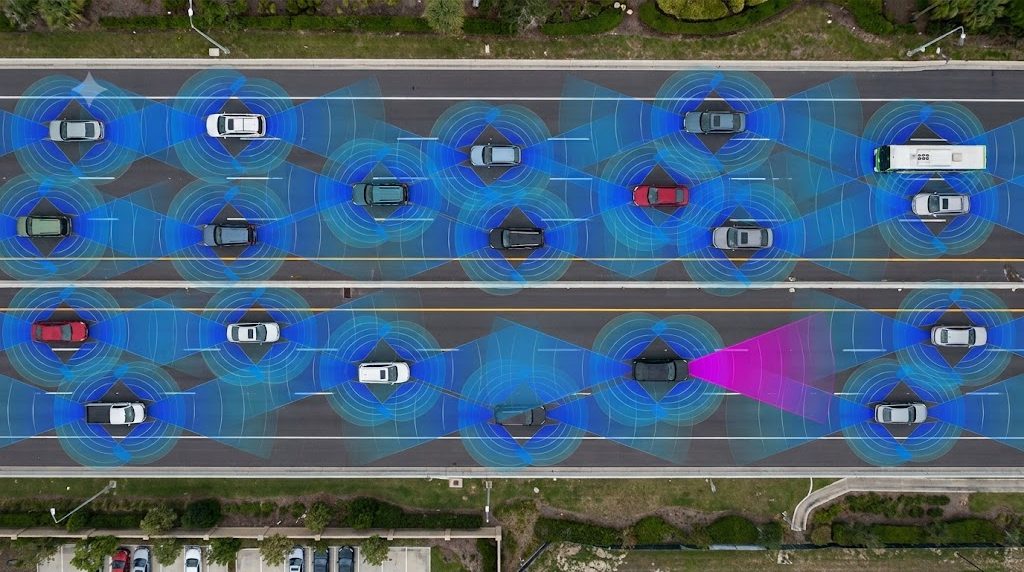
Unlike LiDAR’s visual-based operation, Arbe’s Perception Radar functions as an independent data source. When paired with onboard cameras, it enables a more comprehensive perception framework. Advanced high-resolution systems provide long-range, high-accuracy object detection, empowering drivers or autonomous systems to anticipate and respond to potential hazards more effectively. They supply real-time data about object distance, speed, and travel direction – critical information for safe navigation and decision-making during high-speed maneuvers.
Moreover, Arbe’s technology boasts real-time free-space mapping, allowing it to pinpoint clear pathways and open areas surrounding vehicles. This provides a comprehensive understanding of the environment for Advanced Driver Assistance Systems (ADAS) and autonomous vehicles. The radar even excels in detecting low-reflectivity objects, like pedestrians at night or road debris, effectively addressing the shortcomings of other sensors and significantly bolstering driving safety.
Compared to LiDAR, Arbe’s radar is also significantly more cost-effective and scalable, essential criteria for broad adoption across various automotive applications. The system offers discreet integration behind the vehicle’s bumper, eliminating the need for structural alterations and maintaining the vehicle’s aesthetic design. As such, automakers can more easily incorporate advanced sensing technology into mass-market vehicles without substantially increasing costs.
In intricate urban settings and applications demanding high precision, LiDAR’s resolution and mapping capabilities are undoubtedly impressive. But while LiDAR offers robust resolution and mapping capabilities in ideal conditions, a comprehensive sensor suite that is dependable in every scenario is essential for L2+ through true autonomous driving. When it comes to high-speed driving and all-weather operational scenarios, high-resolution radar is rapidly becoming the market’s preferred choice, given its cost-efficiency and robustness. In this field, Arbe’s 4D radar technology transcends the constraints of traditional radar, providing automakers with a highly efficient alternative to LiDAR. This advancement promises to introduce safer and more cost-effective solutions to the automotive sector, helping to accelerate the widespread adoption of advanced driving technology.
Connect to learn more