Detailed Perception
for Unstructured Terrain
Built on Arbe HD Radar Technology
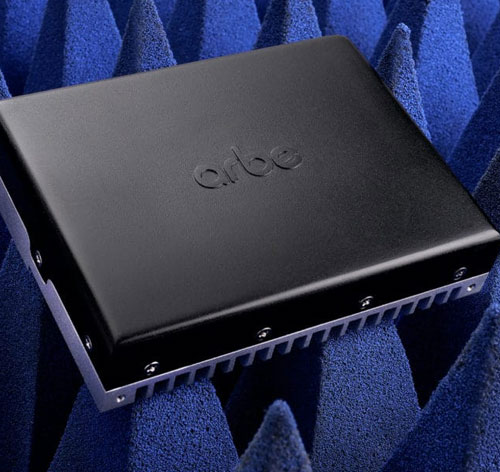
Gryphon, Arbe’s ultra-high-resolution 4D imaging radar, brings the radar revolution to unmanned ground vehicles. Purpose-built for autonomous ground platforms, it delivers the spatial detail to see, localize, navigate, and operate across off-road, unstructured, and GNSS-unavailable environments.
Built on Arbe’s 48Tx × 48Rx architecture with 2,304 virtual channels, Gryphon delivers the spatial detail, close-range performance, and perception outputs needed to detect obstacles, vehicles and personnel, and operate across demanding terrain. The result is a point-cloud dense enough for an autonomy stack to navigate on, not just to raise alerts
Performance at a Glance
 2,304
 0.7° Azimuth
0.9° Elevation
 120° Azimuth
30° Elevation
 300 m
 20 FPS
 20 cm – 80 cm
 0.1 m/s
 25 W
Spatial Detail Beyond Doppler
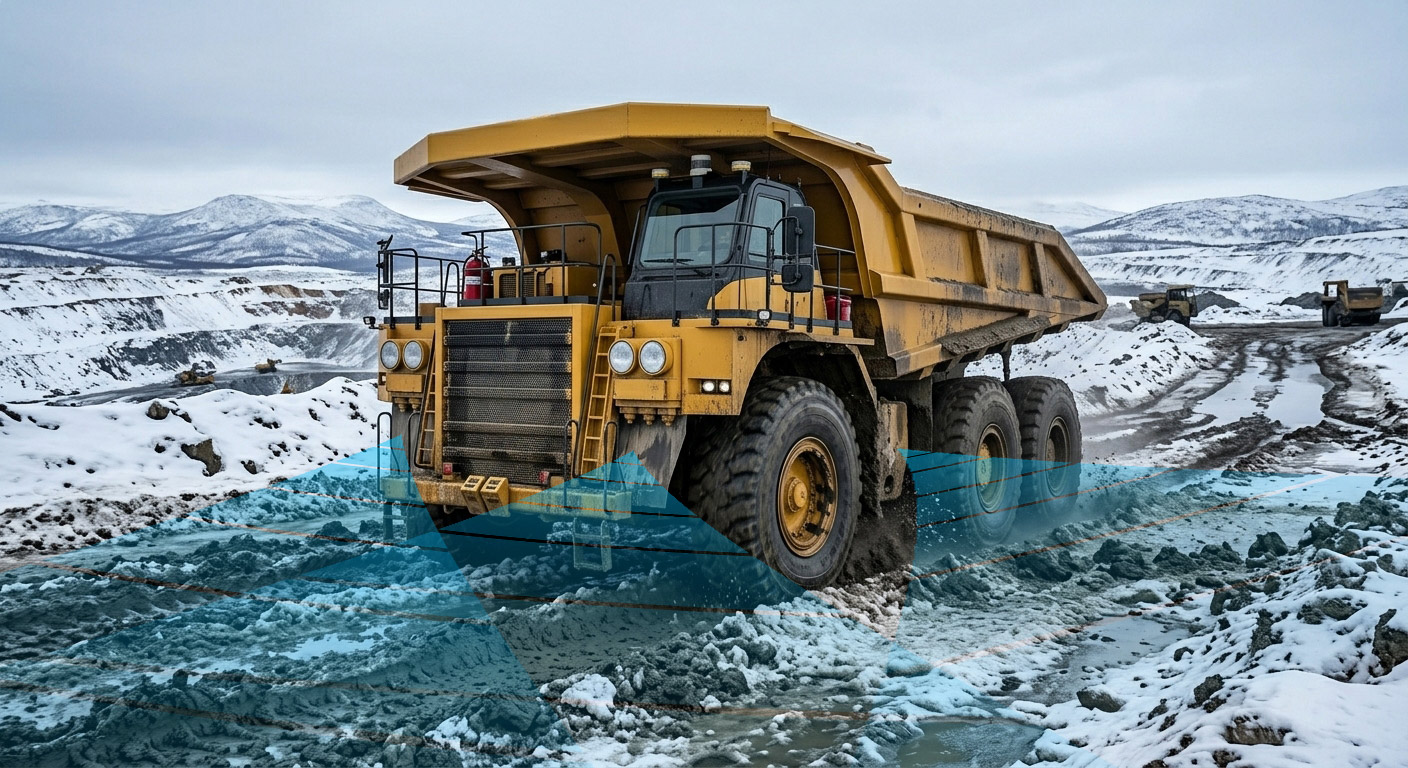
Gryphon’s 2,304 virtual channels detect and separate small objects, even when they are moving slowly or completely stationary, within complex, cluttered terrain, including rocks, debris, barriers, vegetation, poles, and wires.
Fine range resolution preserves close-in detail without relying on Doppler, supporting perception in the low-speed environments where conventional radar can struggle.
- Close-in detail: Resolves nearby terrain and obstacles for maneuvering in terrain, precise positioning at a supply point, loading station, or dock, and working underground.
- Stationary-object detection: Performance does not depend on target movement.
- High dynamic range: Preserves smaller returns beside large, reflective vehicles and machinery.
Technical Specifications
Radar Architecture & Performance7
| Detection range | 300 m |
| Range resolution | 10–80 cm |
| Minimum range | 0.5 m |
| Field of view | 120° azimuth / 30° elevation |
| Angular resolution | 0.7° azimuth / 0.9° elevation |
| Velocity resolution | 0.1 m/s |
| Frame rate | 20 FPS |
Perception & Data Outputs2
| Output data type | Object list, high-frame-rate point cloud, 4D data |
| Data for | Free space, odometry |
Physical & Environmental Specifications8
| Architecture | 48Tx × 48Rx |
| Power consumption | 25 W |
| Dimensions | 135 × 103 × 46 mm |
| Weight | 1 kg |
| Interface | 1000BASE-T |
| Ingress protection | IP67 |
| Operating temperature | −40°C to +70°C |
| Shock & vibration | ISO 16750-3 |
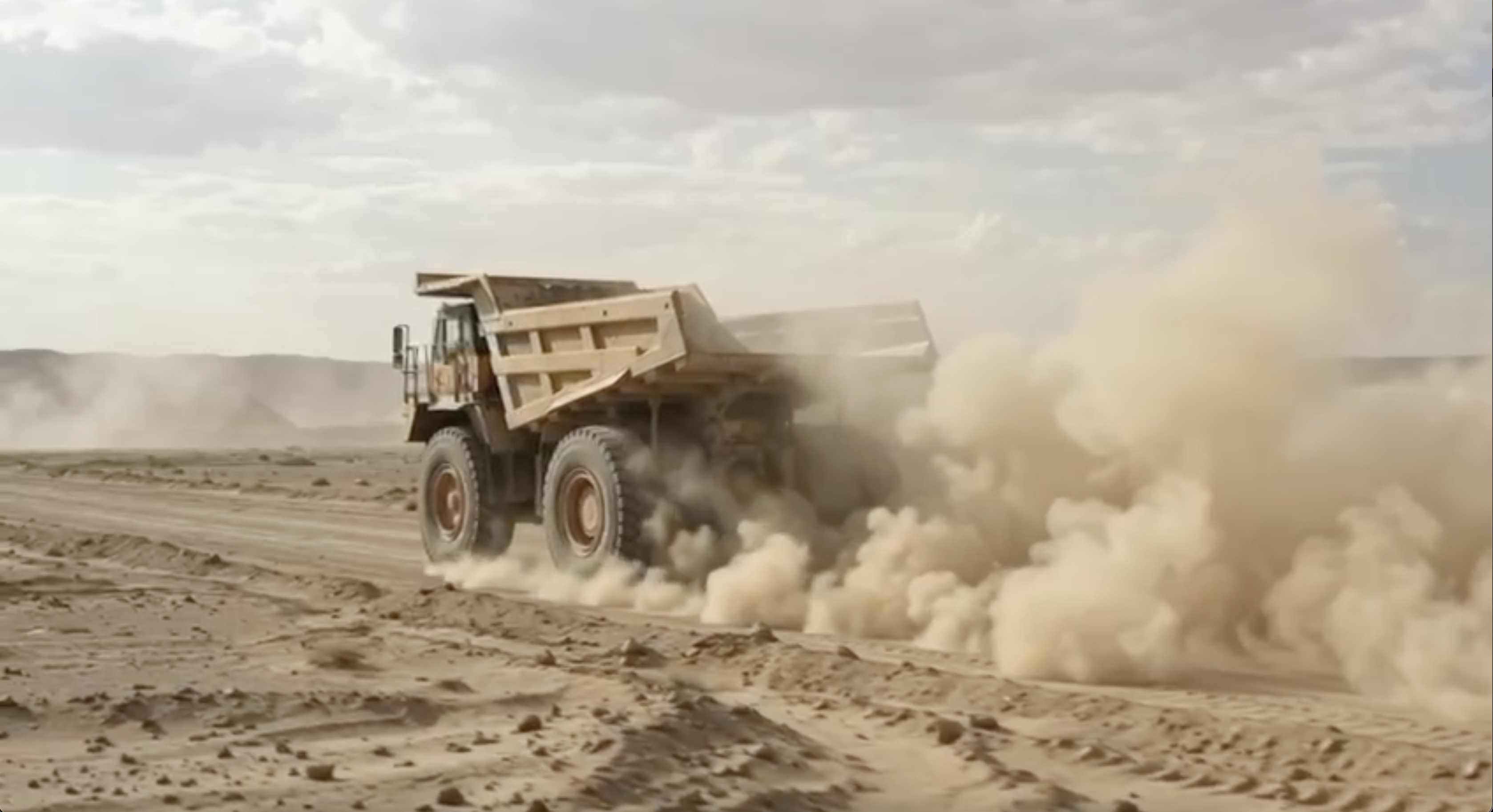
Detailed Perception Through Dust
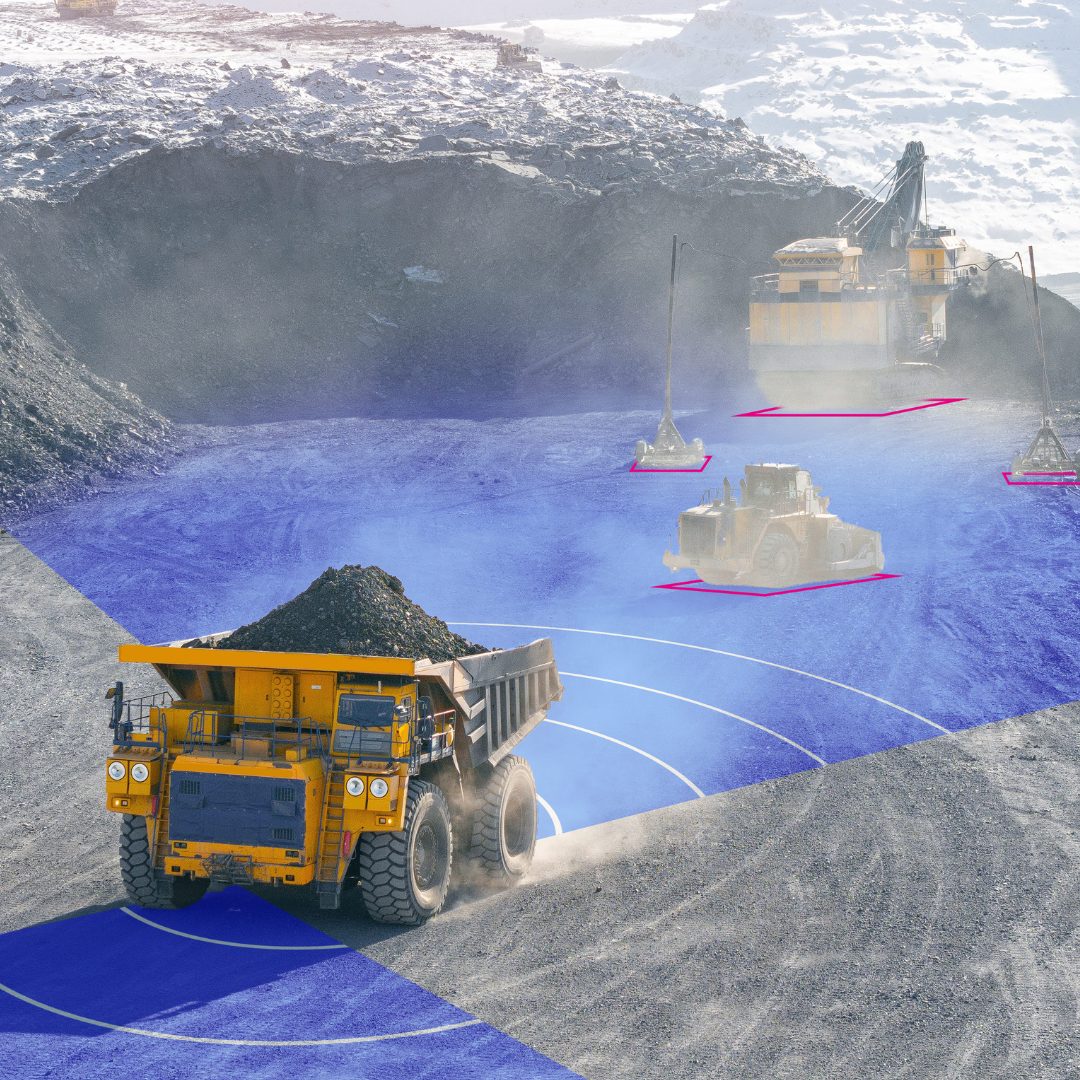
Dust is an everyday condition across off-road routes, work sites, convoys, mines, fields and other environments.
Built for Ground Platform Integration
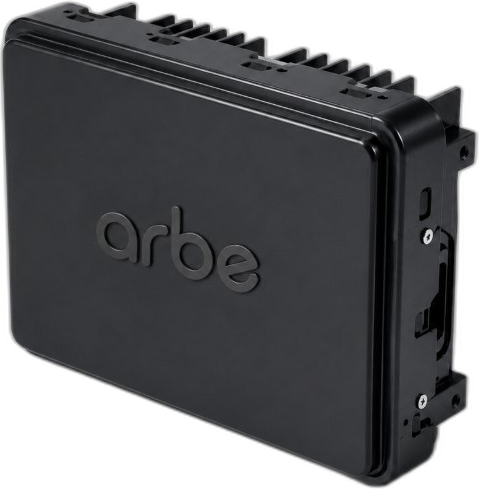
Gryphon packages Arbe’s ultra-high-resolution radar technology into a compact, solid-state system measuring 135 × 103 × 46 mm and consuming 25 W, designed for demanding vehicle-mounted operation.
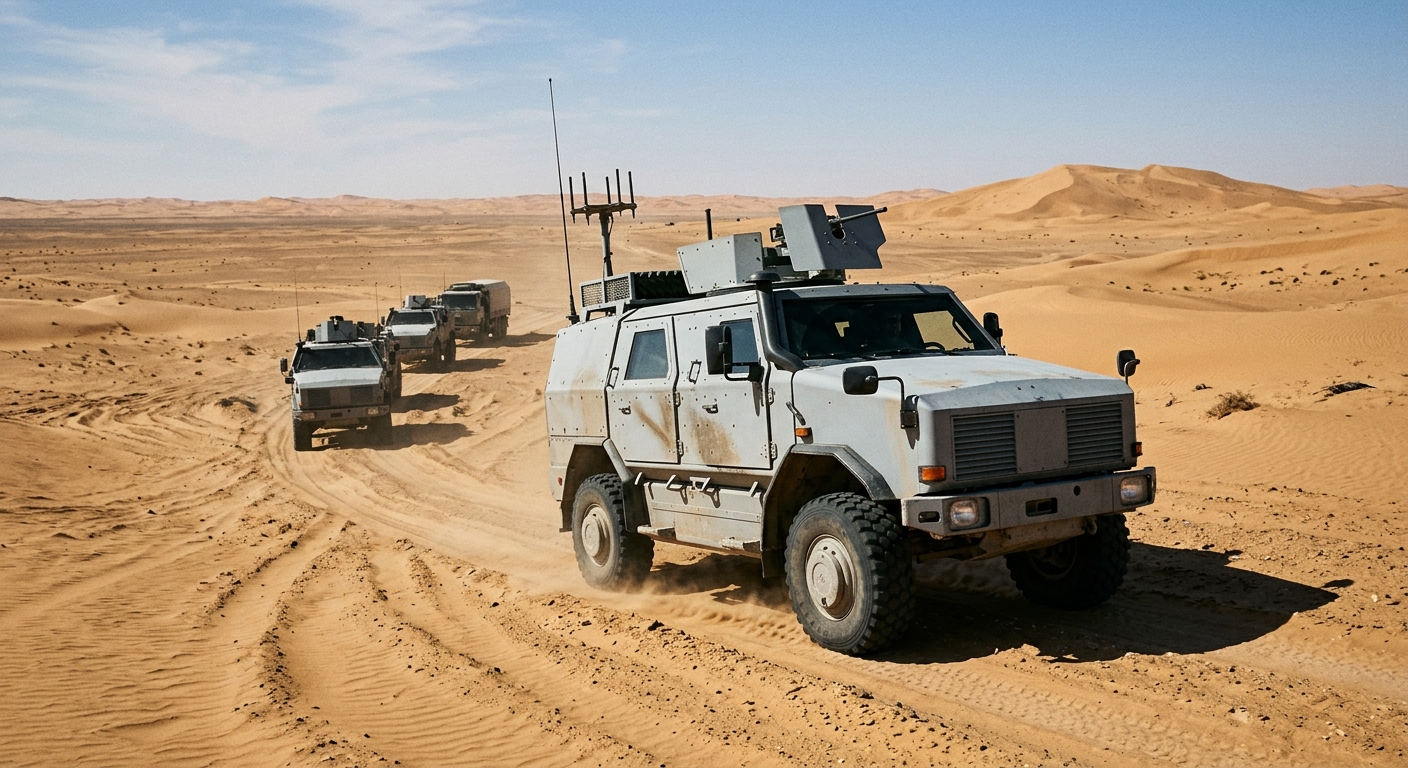
With no moving parts and no field servicing, Gryphon is built for shock and vibration, as well as extended continuous run times. Optimized SWaP-C supports platforms ranging from small tactical vehicles to heavy machinery, while 1 Gbps Ethernet carries high-bandwidth radar data across the longer cable runs common on large ground platforms and allows synchronization on the network.

Automotive-Scale
Radar Technology
Gryphon applies the 48Tx × 48Rx architecture and radar technology Arbe developed for automotive perception, where reliability, consistency, supply, and cost at volume are baseline requirements.
For ground-autonomy integrators, this means production-oriented ultra-high-resolution radar technology designed to scale across fleets rather than only a limited number of specialized platforms.
- Seamless integration: fits existing platform and vehicle architectures without compromising design or configuration.
- SWaP-C efficiency: delivers high-resolution radar perception in a compact size, weight, power, and cost profile.
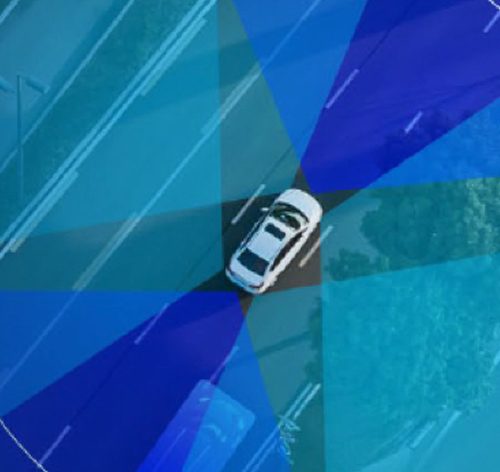
- Architectural flexibility: deployable front-facing, rear-facing, or in surround configurations across advanced autonomy platforms.
Applications
 Mining
 Construction
 Agriculture
 Ports, Yards & Terminals
 Industrial Logistics
 Defense
Frequently Asked Questions
More on the Arbe FAQs page.
What data does Gryphon output?
Gryphon supports selectable perception outputs including free-space and odometry data, a high-frame-rate point cloud, and 4D radar data.
Can Gryphon operate when cameras or lidar cannot?
Yes. Gryphon maintains radar perception through dust, darkness, smoke, fog, rain, glare, and vibration, allowing it to continue supplying environmental data when optical sensors are degraded or unavailable. Its point cloud is dense enough that the platform can keep driving on radar alone when other sensors are unusable, which is why Gryphon serves as the backbone of the perception stack.
How does Gryphon support GNSS-denied operation?
Gryphon provides odometry and localization data that can support positioning against a prior or georeferenced map, together with free-space mapping and environmental perception when GNSS is degraded, obstructed, or unavailable.
How does Gryphon detect stationary objects?
Gryphon’s high spatial and range resolution allows perception to rely on the physical structure of the radar scene rather than depending on Doppler. This enables detection of slow-moving and fully stationary objects, such as a parked vehicle, a berm, or a dropped load, even in scenes where nothing is moving at all.
How does Gryphon integrate with large ground platforms?
Gryphon uses 1 Gbps Ethernet and is designed to carry high-bandwidth sensor data across long cable runs, while supporting multiple perception-output formats for different autonomy architectures. For platforms built around a conventional automotive Ethernet ECU network and an existing sensor and cable architecture, Arbe's Phoenix radar, built on the same chipset and 2,304-channel architecture, is also available.
Discover What Gryphon Makes Possible
Submit a Meeting Request