From Radar Detection
to Radar Perception
Built on Arbe HD Radar Technology
Phoenix is the AI-ready, automotive-grade 4D imaging radar system built on Arbe’s proprietary 2,304-virtual-channel chipset, delivering the spatial detail and sensor redundancy eyes-off autonomy demands across highway, urban, and off-road domains. With real-time range, elevation, velocity, and true object separation, Phoenix translates Arbe’s core radar technology into a dense radar point cloud, supporting eyes-off autonomy, full autonomy, and deep sensor fusion in all environments.
Performance at a Glance
 0.7° Azimuth
0.9° Elevation
 120° Azimuth
30° Elevation
 300 m
300 m
 20 FPS
 20 cm – 80 cm
 0.1 m/s
 ~0
~0
 100s
100s
Best Radar Image Quality for Complex Environments
Arbe’s underlying chipset mathematically suppresses RF noise; the Phoenix unit turns that into the clean, real-world results needed to secure vehicle safety certifications.
- No phantom braking: suppresses sidelobe clutter to isolate true targets and prevent dangerous false-alarm braking.
- RF-crowd resilience: multi-band chirp waveform and active filtering prevent signal corruption when surrounded by other transmitting radars.
- Weak-target visibility: high dynamic range keeps pedestrians and cyclists visible right next to massive reflectors such as semi-trucks.

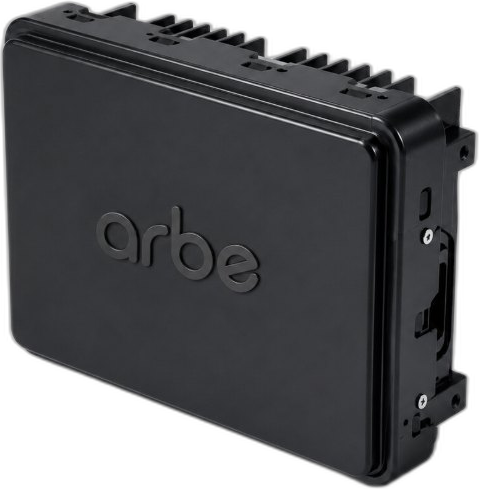
Technical Specifications
Radar performance7
| Frequency band | 76–81 GHz |
| Virtual channels | 2,304 (48 TX x 48 RX) |
| Chip architecture | 4 TX chips, 2 RX chips, 1 processor chip |
| Native range resolution | 20 cm – 80 cm |
| Range accuracy | 4 cm – 20 cm |
| Velocity measurement range | -400 to +200 km/h |
| Velocity accuracy | ±0.1 km/h |
Output and interface2
| Output data type | 4D point cloud (range, azimuth, elevation, Doppler) |
| Communication interface | Automotive Ethernet 1000Base-T1 |
Physical and power4
| Dimensions (W x H x D) | 135 x 102 x 42 mm |
| Weight | 1 kg |
| Power consumption | 26 W |
| Supply voltage | 12 V |
Environmental and compliance4
| Operating temperature | -40 to +85 °C |
| Protection / environmental rating | IP67 |
| Shock & vibration | Automotive-grade |
| Regulatory compliance | FCC approved |
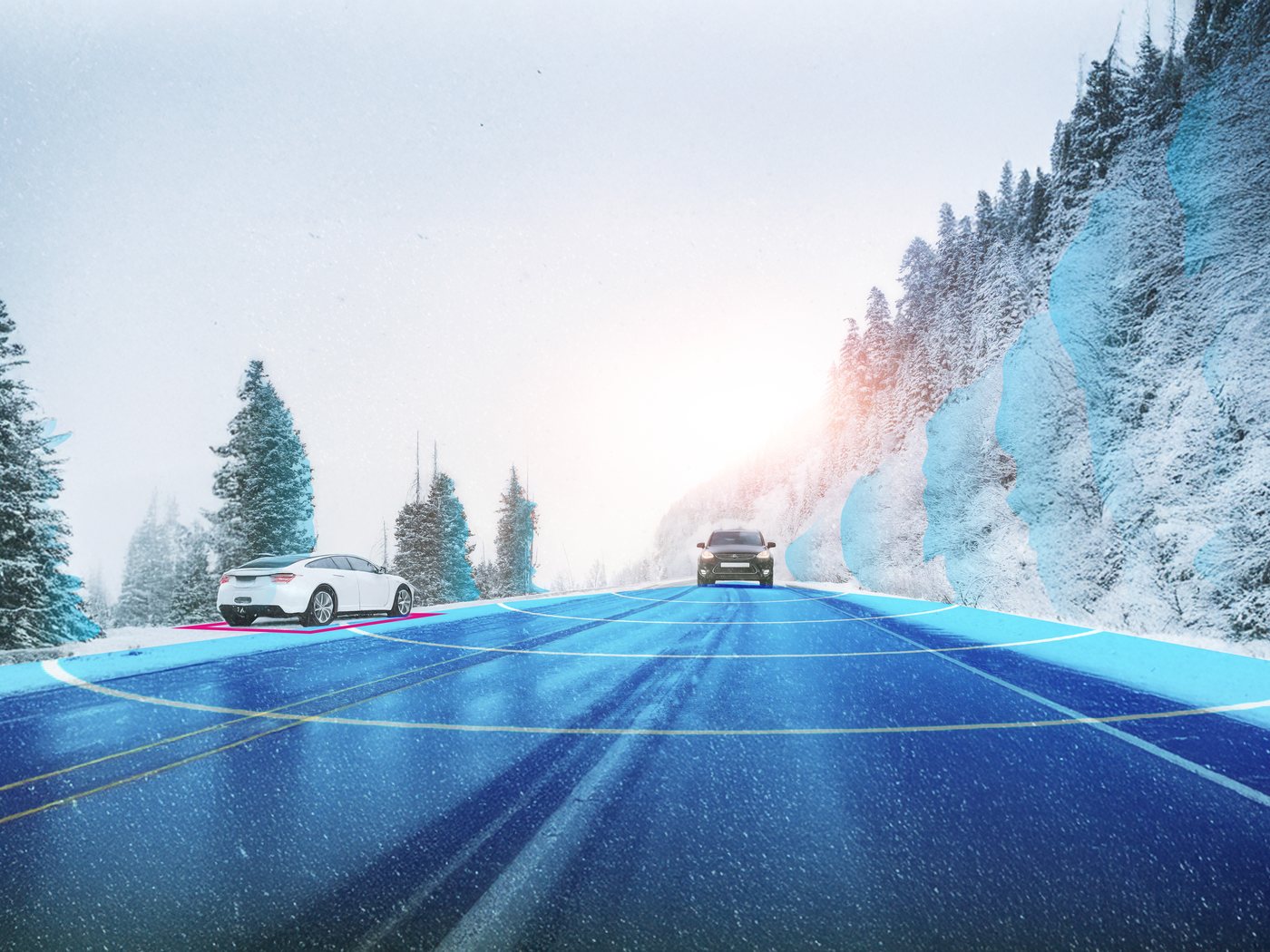
The Radar Behind Eyes-Off Autonomy, Across Every Operating Domain
With long-range detail and true object separation, Phoenix is a key enabler of safe, reliable eyes-off autonomy at full highway speeds, in dense urban traffic, and across off-road terrain.
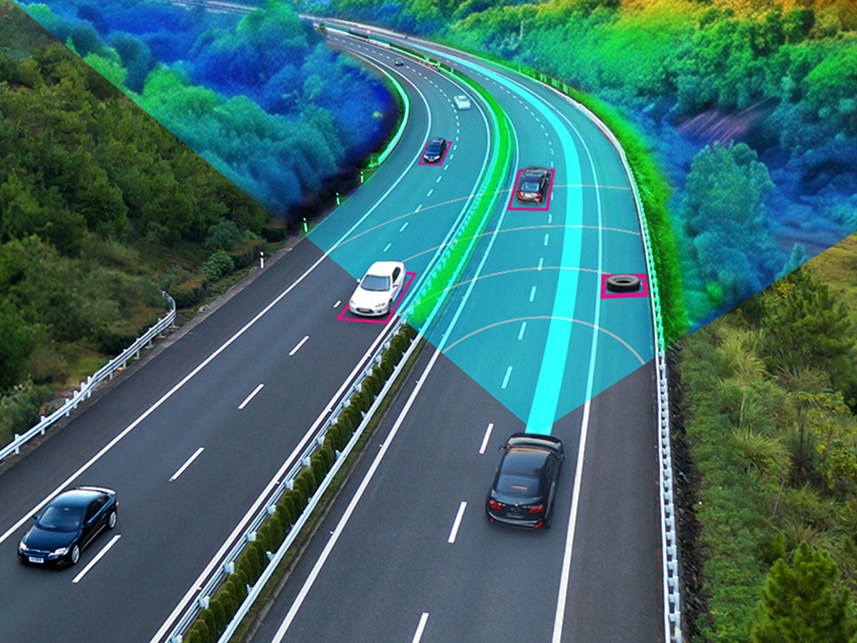
Phoenix reveals critical hazards early, from lost cargo and stopped vehicles to vulnerable road users and obscured obstacles, giving the perception stack more time, more detail, and cleaner radar data to understand the scene and respond. When cameras and LiDAR are challenged by lighting, rain, dust, or fog, Phoenix maintains HD radar performance, providing the sensor redundancy autonomous architectures require.
Detailed Radar Images for AI and Sensor Fusion
Because Phoenix produces a dense, structured radar image, its output does more than confirm that an object exists. Phoenix captures range, elevation, relative velocity, object separation, and motion in real time, and outputs a high-density, low-latency 4D point cloud directly to the platform’s central compute unit. The synchronized spatial and velocity data is compatible with standard sensor-fusion algorithms and AI perception models – a perception-ready layer for OEM and autonomy AI teams.
Compact System.
Full-Scale Perception.
Phoenix packages Arbe’s HD radar technology into a compact system for advanced mobility, autonomy, and safety-critical platforms.
- Seamless integration: fits existing platform and vehicle architectures without compromising design or configuration.
- SWaP-C efficiency: delivers high-resolution radar perception in a compact size, weight, power, and cost profile.
- Architectural flexibility: deployable front-facing, rear-facing, or in surround configurations across advanced autonomy platforms.
Applications
Phoenix serves a wide range of autonomous, automotive, and off-highway platforms. The examples below map common target platforms to the operating domains and perception functions Phoenix supports.
 Passenger Vehicles
 Robotaxi
 Autonomous Truck
Frequently Asked Questions
More on the Arbe FAQs page.
How does Phoenix integrate with a platform's existing compute architecture?
Phoenix outputs its high-density, low-latency 4D point cloud directly to the platform's central compute unit. As a software-defined hardware platform, it interfaces with standard automotive networks, so developers can deploy and update perception algorithms across the platform's lifecycle.
How does Phoenix handle weather and lighting interference?
Phoenix operates on the RF spectrum, so it is unaffected by the conditions that degrade cameras and LiDAR. It maintains ultra-high-resolution performance, target tracking, and free-space mapping in heavy rain, thick fog, dust, glare, and total darkness.
Can Phoenix serve as a LiDAR alternative or supplement?
With ultra-fine azimuth and elevation resolution, Phoenix generates a dense, structured 4D point cloud with LiDAR-like spatial detail, making it a reliable all-weather alternative or redundant supplement to optical sensors on autonomous platforms.
Is Phoenix qualified for automotive mass production?
Phoenix is a commercially mature system in a compact, production-ready form factor that integrates behind standard vehicle fascia or body panels, qualified for automotive deployment with defined thermal limits and regulatory certifications.
Resources
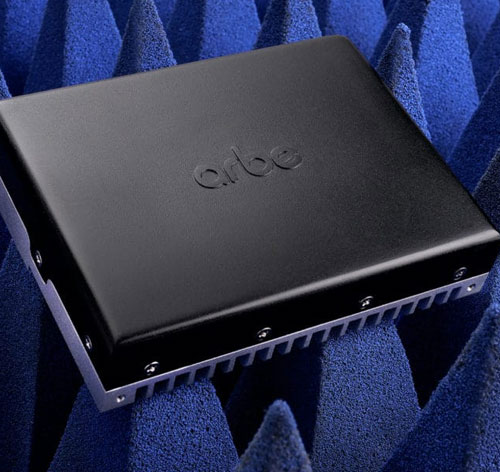

Ready to evaluate Phoenix on your platform?
Connect with our engineering team to discover how Arbe's 4D imaging radar can enhance perception, redundancy, and safety across your platform.